Warehouse racking is more than a collection of steel beams and upright frames. It becomes part of a working structural system when an earthquake occurs. The stored pallets also add weight, movement, and risk.
So, what are the seismic requirements for warehouse racking? They are the engineering measures that help racks resist earthquake forces, control movement, and protect people nearby. These measures may include anchored uprights, reinforced frames, properly designed beam connections, base plates, and suitable load limits. The exact design depends on the building, soil, rack height, pallet weight, aisle layout, and local seismic conditions.
John F. Meehan, P.E., a recognized rack-engineering specialist, explains the central idea: “A rack is not just storage equipment; it is a structural system that must be designed for the building and its contents.”
That distinction matters.
A tall rack can sway visibly during shaking. A loose anchor may then allow an upright to lift from the concrete floor. One damaged connection can affect an entire storage bay. Engineers therefore review the rack, the slab, the anchors, and the stored goods together.
Standards and local building rules provide the technical framework. However, compliance alone does not guarantee a safe installation. Field conditions can differ from drawings. Pallets may be heavier than expected. Maintenance records may also be incomplete.
That is where practical experience becomes important. A reliable seismic review should combine calculations, site inspection, installation quality, and realistic operating habits. Some assumptions may be wrong. They should be tested before an earthquake tests the rack.
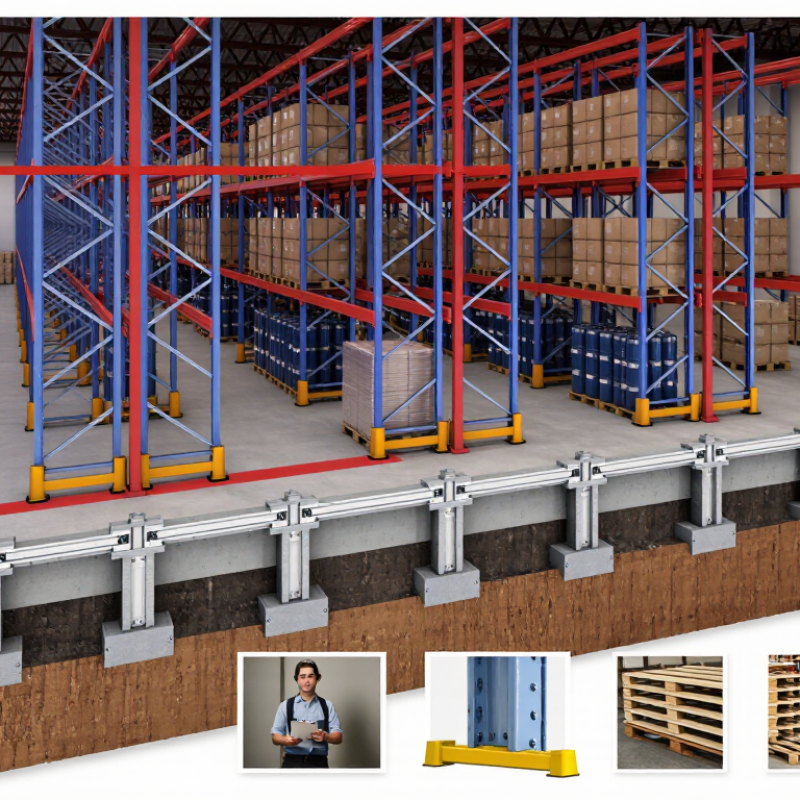
Seismic requirements explain how warehouse racking should resist earthquake forces, not just vertical pallet weight. These rules consider the building location, soil conditions, rack height, stored load, and connection details. Requirements vary by jurisdiction, so local building codes and a qualified structural engineer should guide the design.
In practical terms, seismic design often requires stronger frames, bracing, base plates, and anchors. Anchors transfer movement into the concrete floor. They must match the slab’s strength and embedment depth. A loaded rack can sway, twist, or pull away from its base during shaking. Even a small gap beneath a footplate can become a serious weakness.
Rack loads also need accurate documentation. Pallet weight, beam capacity, load placement, and clearance should be checked together. Heavy goods stored high can increase overturning forces. Regular inspections should look for bent uprights, loose anchors, damaged braces, and uneven floors. A rack may appear stable while hiding a distorted connection.
The difficult part is that no checklist catches every condition. Warehouse changes can quietly alter the original design. A new pallet type, relocated rack, or damaged floor may require engineering review. Clear records and trained inspectors make decisions more reliable. Safety depends on details that are easy to overlook.
Earthquakes affect warehouse racking in several connected ways.
Ground movement can make upright frames sway, twist, or separate from their anchors. Loaded beams may shift, especially when pallets are uneven or poorly positioned. Even a small displacement can create a falling-load hazard in a busy aisle. The risk increases when racks stand on weak floors or near building joints.
During site assessments, engineers inspect anchor bolts, base plates, bracing, beam connectors, and floor conditions. They also review pallet weights, rack height, aisle width, and storage patterns. Seismic requirements help these components resist horizontal forces and repeated movement. Proper anchorage transfers earthquake forces into the concrete slab. Bracing limits sideways deformation. Beam locks help prevent connections from opening when the frame shakes.
Details matter.
A damaged upright can reduce the capacity of an entire bay. Corrosion, impact marks, and missing connectors should never be treated as cosmetic issues. Regular inspections are practical, but they cannot replace a qualified structural review. No assessment is perfect. Warehouse layouts change, and workers may add heavier pallets than the original design allowed. That assumption deserves challenge.
Design decisions should follow applicable local seismic standards and documented engineering calculations. Installation must match the approved drawings, including bolt size, embedment, spacing, and bracing locations.
After an earthquake, isolate visibly damaged areas and arrange a professional inspection before reuse. A rack that looks straight may still contain hidden connection damage. Worker training, clear load labels, and disciplined housekeeping reduce secondary risks when movement begins.
Why Are Seismic Requirements Needed for Warehouse Racking?
Unsecured warehouse racks create more than inventory losses. During an earthquake, a tall bay can sway, shed cartons, and collapse into an aisle. Even without seismic movement, forklift impacts can bend uprights, loosen anchors, or hide damage behind pallets. OSHA estimates that powered industrial trucks cause about 35,000 serious injuries and 85 fatalities each year in the United States. These figures cover forklift incidents, not rack failures alone, but they highlight the risks within shared traffic zones. FEMA’s E-74 guidance identifies storage racks as nonstructural components that can overturn or obstruct exits during earthquakes.
Seismic design requires more than thicker steel. Engineers review rack height, stored mass, floor connections, building movement, and local hazard levels. ANSI MH16.1 and ASCE 7 provide recognized design frameworks. However, field conditions often reveal gaps. An approved drawing cannot compensate for missing anchors, uneven floors, or overloaded beam levels. The uncomfortable truth is simple: a rack may look stable while its connections slowly weaken.
Tips: Keep aisles clear and post load limits at eye level. Use guards near forklift routes. Inspect uprights, braces, anchors, and beam locks after every impact. Photograph damage before repairs. Record inspection dates and corrective actions. Have a qualified engineer verify seismic anchorage and load assumptions. Visual checks help, but they are not enough.
Why Are Seismic Requirements Needed for Warehouse Racking?
Key Seismic Design Factors for Racking Stability
Seismic requirements help warehouse racking resist sudden horizontal movement. During an earthquake, loaded beams can sway, twist, or separate from their connections. A stable rack protects inventory, workers, and emergency access routes. It also reduces costly downtime after an event.
Good seismic design begins with accurate site information. Engineers should assess the building’s seismic zone, soil conditions, rack height, bay spacing, and stored load. Pallet weight matters greatly. So does its position on each beam. Anchors must transfer earthquake forces into the concrete slab without excessive cracking or pullout. Uprights, bracing, beam connectors, and base plates need compatible strength. Clearance between racks can also prevent dangerous contact during movement. A design may look correct on paper, yet field conditions often differ. Uneven floors, damaged anchors, and overloaded beams deserve careful review.
Tips: Keep loads centered and within rated capacities. Inspect anchors after installation and after any significant earthquake. Replace bent components, rather than straightening them casually. Use qualified structural professionals for calculations and approvals. Follow applicable local codes and the rack manufacturer’s engineering data. Small details matter. Overlooked floor joints or loose connectors can weaken the entire system. Regular inspections should record damage, changes in loading, and repairs. That record supports better decisions later.
| Design Factor | Why It Matters During an Earthquake | Typical Design or Verification Requirement | Potential Failure Mode | Priority | Relevant Technical Basis |
|---|---|---|---|---|---|
| Site Seismic Hazard | Ground shaking intensity varies by location, soil conditions, and seismic hazard classification. The rack must be designed for the earthquake demand expected at the installation site. | Obtain the applicable design spectral accelerations, site class, seismic design category, and local code parameters from the project structural criteria. | Under-designed frames, excessive sway, connection damage, or progressive rack collapse. | High | Applicable building code, local seismic maps, and project geotechnical information. |
| Rack Height-to-Depth Ratio | Tall and relatively narrow racks generally experience greater overturning demand and lateral displacement than shorter, deeper configurations. | Check global stability, overturning resistance, frame slenderness, and allowable drift for the complete rack geometry. | Excessive deflection, pallet displacement, frame buckling, or overturning. | High | Structural analysis under the governing horizontal and vertical load combinations. |
| Stored Load and Load Distribution | Pallet mass contributes directly to seismic inertial forces. Uneven loading can shift the center of gravity and increase torsion or local member demand. | Use the maximum permitted pallet weight and account for the actual number, location, and distribution of stored loads at each beam level. | Beam overload, connector disengagement, pallet fall, or uneven frame response. | High | Approved rack load schedule, operating limits, and seismic load combinations. |
| Vertical Seismic Effects | Earthquake motion can temporarily increase or reduce the gravity force carried by beams, columns, anchors, and connections. | Where required by the governing code, include vertical seismic effects in the design of members, anchors, base plates, and connections. | Local yielding, anchor tension failure, beam disengagement, or loss of bearing. | High | Project seismic criteria and applicable structural design standard. |
| Base Plate and Anchor Design | Seismic shear, tension, and overturning forces are transferred from the rack uprights into the concrete slab through base plates and anchors. | Verify anchor tension, shear, interaction effects, edge distance, embedment, concrete strength, and slab thickness. | Anchor pullout, concrete breakout, anchor shear failure, or base-plate distortion. | High | Anchor manufacturer design data, concrete design provisions, and approved foundation drawings. |
| Concrete Slab Capacity | A rack may be structurally adequate while the supporting slab is not capable of resisting concentrated seismic forces. | Confirm slab thickness, reinforcement, concrete strength, joints, cracks, load-transfer details, and allowable anchor locations. | Slab cracking, local breakout, anchor loss, or differential movement. | High | Existing-condition survey, structural drawings, and concrete assessment. |
| Beam-to-Upright Connections | Beam connectors must resist repeated horizontal movement while maintaining positive engagement with the uprights. | Check connector strength, locking features, rotation capacity, bearing, and the possibility of disengagement under rack deformation. | Beam unseating, connector fracture, pallet drop, or partial bay collapse. | High | Rack system qualification data and project-specific connection calculations. |
| Upright and Bracing System | Uprights and braces provide the primary vertical and lateral load paths. Their interaction controls rack strength and drift. | Evaluate axial compression, tension, bending, local buckling, brace forces, splice capacity, and overall frame stability. | Upright buckling, brace yielding, frame racking, or loss of vertical alignment. | High | Rack frame analysis, member capacity checks, and tested system data where applicable. |
| Flue and Aisle Bracing | Long rows and back-to-back rack arrangements can develop torsional and longitudinal seismic demands that are not resisted by upright frames alone. | Provide longitudinal, transverse, and horizontal bracing as required by the rack layout and calculated load path. | Row instability, excessive longitudinal drift, pallet interference, or cascading damage. | High | Seismic rack layout, structural calculations, and manufacturer-independent engineering review. |
| Pallet and Load-Restraint Measures | Even when the rack remains standing, pallets, cartons, and loose products may slide or fall during lateral movement. | Use suitable pallet supports, wire decking, backstops, front stops, netting, or other restraints where the risk assessment requires them. | Falling objects, blocked aisles, product damage, and injury to personnel. | High | Risk assessment, operating procedures, storage-unit characteristics, and applicable safety requirements. |
| Clearances to Buildings and Equipment | Insufficient separation allows racks to strike walls, conveyors, sprinklers, columns, or adjacent racks as they sway. | Maintain calculated seismic clearance and coordinate rack movement with building structure, fire protection, conveyors, and utilities. | Impact damage, blocked exits, sprinkler impairment, or transfer of unintended forces. | High | Coordinated structural, fire-protection, material-handling, and architectural drawings. |
| Rack-to-Rack Interaction | Adjacent racks can collide if they move out of phase or if the aisle width is inadequate for seismic displacement. | Consider combined movement, row spacing, back-to-back ties, and the effect of neighboring structures on the seismic load path. | Collision, connection damage, aisle obstruction, or progressive instability. | Medium | Overall warehouse layout and three-dimensional displacement assessment. |
| Pallet Stability and Compatibility | Pallet dimensions, condition, stiffness, and bearing on beams or decking affect whether loads remain supported during motion. | Verify pallet quality, pallet overhang limits, load centering, beam bearing, and compatibility with the rack support system. | Pallet rotation, slip-through, collapse, or falling inventory. | High | Pallet specifications, storage-unit design, and approved operating limits. |
| Equipment and Nonstructural Attachments | Conveyors, guards, sprinklers, cable trays, and sensors can impose unintended forces or become falling hazards during rack movement. | Design independent supports or flexible connections where needed and coordinate all attachments with the rack seismic movement. | Equipment detachment, pipe rupture, fire-system damage, or obstruction of emergency routes. | High | Nonstructural seismic design requirements and coordinated equipment drawings. |
| Installation Quality | Incorrect anchor torque, missing brace components, incomplete locking devices, or out-of-plumb frames can substantially reduce seismic capacity. | Control installation tolerances, anchor installation, fastener tightening, brace placement, beam locking, and rack plumbness. | Premature connection failure, reduced load capacity, or unpredictable structural response. | High | Approved installation procedures, inspection records, and construction quality plans. |
| Inspection and Maintenance | Impact damage, corrosion, unauthorized modifications, and overloaded locations can weaken the rack before an earthquake occurs. | Perform routine inspections, document damage, remove unsafe loads, repair qualified components, and re-evaluate modified layouts. | Hidden loss of capacity, unstable bays, or failure during moderate shaking. | High | Warehouse inspection program and applicable rack safety guidance. |
| Post-Earthquake Inspection | Damage may not be obvious from a distance. Continued use of a damaged rack can create secondary collapse and safety risks. | Isolate affected areas, inspect uprights, beams, braces, anchors, slabs, connectors, and stored loads before reoccupation. | Secondary collapse, falling inventory, or injury during cleanup and recovery. | High | Documented emergency response plan and inspection criteria established before occupancy. |
| Load-Path Continuity | Seismic forces must travel continuously from stored goods through beams, frames, braces, base plates, anchors, and the supporting slab. | Trace and verify every connection and support in both principal horizontal directions, including force reversals. | Unexpected connection overload, local failure, or collapse of an isolated rack row. | High | Complete structural calculation package and coordinated construction documents. |
Seismic requirements help warehouse racking remain stable when the ground moves unexpectedly. In a strong earthquake, an unanchored upright can sway, buckle, or separate from its base. Stored cartons may then fall into aisles, striking workers or blocking emergency routes. The danger is not limited to damaged inventory. A collapsing rack can affect sprinklers, lighting, doors, and nearby building structures.
Proper seismic design connects racking to the floor and considers load height, aisle width, pallet weight, and local ground conditions. Engineers review these details against applicable building codes and site requirements. In practical inspections, small problems often matter: loose anchors, overloaded beams, damaged uprights, or pallets extending beyond supports. A tidy aisle is not enough. I have seen warehouses treat visible order as proof of safety, which is an unreliable assumption.
Tips: Keep rack loads within documented limits. Mark damaged components immediately. Schedule inspections after earthquakes, impacts, or major layout changes. Ask a qualified structural professional to verify anchorage and calculations. Keep inspection records accessible. Train workers to report unusual movement, leaning frames, and fallen goods. No system is perfect, and maintenance plans may overlook slow damage from forklifts. Regular review helps protect people, inventory, and the facility itself.
Global earthquake frequency increases sharply as magnitude decreases. Even moderate earthquakes can create horizontal forces that cause unanchored racks, pallets, and stored goods to shift or collapse.
Approximate average number of earthquakes recorded worldwide each year by magnitude range. Seismic-compliant racking uses site-specific engineering, anchorage, bracing, beam-to-frame connections, and load limits to help protect people, inventory, and facilities. Source: U.S. Geological Survey, global earthquake frequency estimates.
Tall racks may sway, shed cartons, or collapse during an earthquake. Forklift impacts can loosen anchors and bend uprights. The damage may hide behind pallets. Small details matter.
An unanchored upright can shift, buckle, or separate from the floor. Falling cartons may strike workers or block emergency exits. The aisle can become unusable within seconds.
Engineers review rack height, bay spacing, pallet weight, floor conditions, and local ground movement. They also examine anchors, braces, beam connectors, and base plates. Every connection matters.
A pallet placed off-center can increase sway and twisting. Heavy goods on upper beams create greater movement risks. Keep loads centered and within documented limits.
No. Field conditions may differ from drawings. Uneven floors, missing anchors, overloaded beams, and loose connectors can still weaken the system. Paperwork is not proof of current safety.
Check uprights, braces, anchors, beam locks, and base plates. Photograph visible damage before repairs. Mark affected areas immediately. Do not casually straighten bent components.
Inspect racks after impacts, earthquakes, major layout changes, and unusual movement. Record inspection dates, damage, repairs, and loading changes. Routine visual checks help, but they are not enough.
Keep aisles clear and post load limits at eye level. Install guards near forklift routes. Train workers to report leaning frames and fallen goods. A tidy aisle can still hide serious damage.
A qualified structural professional should review anchorage, floor connections, and design loads. Local requirements and site conditions must guide the review. I might sound cautious, but guessing here is poor practice.
Seismic requirements for warehouse racking are safety measures designed to help storage systems withstand earthquake forces and remain stable during ground movement. The question “what are the seismic requirements for warehouse racking” involves more than simply anchoring upright frames. It includes evaluating the building’s seismic conditions, rack height and load capacity, connection strength, floor anchorage, bracing, beam security, and the interaction between the rack system and the facility structure.
Earthquakes can cause racks to sway, twist, buckle, or overturn, potentially resulting in falling inventory, blocked aisles, equipment damage, and serious injuries. Proper seismic design reduces these risks by distributing forces through suitably engineered components and secure connections. Regular inspections, load control, clear operating procedures, and maintenance are also essential for long-term stability. By meeting appropriate seismic requirements, warehouses can better protect employees, inventory, and buildings while supporting safer operations and reducing costly interruptions after an earthquake.

LogiSteel Racking