Choosing a pallet racking system affects warehouse speed, stock accuracy, labor effort, and product quality. Many operations compare FIFO and LIFO because each method supports different inventory priorities. A food distributor may need older cartons shipped first. A spare-parts warehouse may store identical items for long periods.
So, what is the difference between FIFO and LIFO racking systems? FIFO means “first in, first out,” while LIFO means “last in, first out.” Their differences involve pallet movement, access design, storage density, rotation control, and operating cost. Selective racks, pallet flow racks, drive-in racks, and push-back racks can support these strategies in different ways.
Small details matter.
For example, a FIFO layout may use loading lanes at the rear and picking lanes at the front. Rollers help pallets move forward after one pallet leaves. A LIFO system may load and retrieve pallets from the same side, reducing aisle space and simplifying installation. However, it may hide older stock behind newer pallets. That risk is easy to underestimate.
This guide explores the top 10 differences between FIFO and LIFO racking systems through practical warehouse considerations. It examines stock rotation, accessibility, space utilization, product suitability, equipment needs, and maintenance demands. The “best” system is not universal. It depends on product life, handling frequency, pallet stability, and inventory discipline. Real warehouses are rarely perfect. Labels fade, demand changes, and operators sometimes bypass procedures. A reliable decision must consider those imperfect conditions, not only a clean layout drawing.
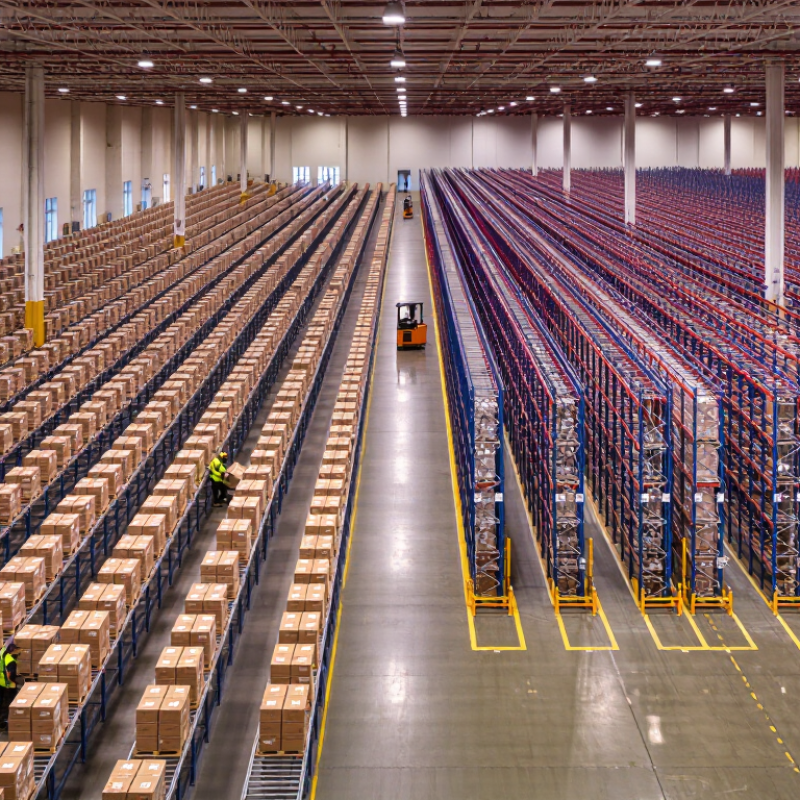
Core Principles of FIFO and LIFO Racking Systems
FIFO means “first in, first out.” The oldest received pallet leaves the rack first. This method suits food, pharmaceuticals, cosmetics, and other date-sensitive inventory. Pallet-flow racks commonly use rear loading and front picking. Gravity rollers move stock forward, reducing unnecessary forklift travel. A 2024 MHI industry report found that 83% of supply-chain professionals expect increased technology investment within five years. Better rack visibility can support that shift.
LIFO means “last in, first out.” The newest pallet enters and leaves from the same aisle. Drive-in and push-back systems often follow this principle. LIFO can provide higher storage density because fewer aisles are required. It works well for non-perishable products, seasonal stock, or large batches with limited SKU variety. However, dense storage may hide older pallets. That creates a rotation risk.
The neat rule has limits. A warehouse can use FIFO for sensitive goods and LIFO for stable materials. Operators should measure product age, pallet dimensions, replenishment frequency, and forklift movements before choosing. The 2023 WERC DC Measures Report emphasizes the value of tracking operational metrics, including inventory accuracy and order-cycle performance. In practice, a rack plan may look efficient on paper but fail during peak receiving. Real aisle observations matter. Even experienced teams sometimes overestimate usable capacity.
| No. | Comparison Dimension | FIFO Racking System | LIFO Racking System | Typical Application |
|---|---|---|---|---|
| 1 | Stock Rotation Principle | The first pallet received is intended to be the first pallet dispatched. | The most recently loaded pallet is generally the first one dispatched. | FIFO: dated, perishable, or expiration-sensitive inventory. LIFO: durable, non-perishable goods. |
| 2 | Loading and Unloading Flow | Loading and picking normally occur from opposite sides or through a flow lane that moves pallets forward. | Loading and picking commonly occur from the same aisle, so the newest pallet can remain accessible. | FIFO: pallet-flow or two-sided flow layouts. LIFO: drive-in or push-back layouts. |
| 3 | Access to Individual Pallets | Each pallet position can typically be reached in sequence without moving newer stock ahead of older stock. | Access to pallets deeper in a lane may require removing or moving pallets stored closer to the aisle. | FIFO: frequent order picking and stock inspection. LIFO: dense reserve storage. |
| 4 | Inventory Age Control | Provides a physical storage sequence that supports age-based inventory control and reduces the risk of older stock remaining behind newer stock. | Requires stronger procedural or digital controls to monitor older inventory that may remain deeper in the lane. | FIFO is preferable where shelf life or date traceability matters. |
| 5 | Storage Density | Usually requires additional aisle access or a two-sided layout, which can reduce maximum pallet density. | Often provides higher storage density because multiple pallets can be stored deeply in a lane with fewer access aisles. | LIFO is useful when warehouse space is limited and selectivity is less important. |
| 6 | SKU and Product Mix | Works well when many SKUs require regular access, especially in selective or flow-based arrangements. | Works best when each lane contains the same SKU or when the number of SKUs is limited. | FIFO: high SKU variety. LIFO: high volume with fewer SKUs. |
| 7 | Forklift Movement | Forklift travel may be distributed across separate loading and picking aisles, depending on the layout. | Forklifts often enter the storage lane or place pallets onto push-back mechanisms, requiring careful depth and load management. | The appropriate choice depends on equipment type, lane depth, and operator skill. |
| 8 | Handling and Product Damage Risk | Controlled forward movement can reduce the need to disturb older pallets during normal picking operations. | Deep-lane handling and pallet contact can increase the importance of load stability, rack protection, and operating discipline. | Both systems require suitable pallets, inspections, and safe operating procedures. |
| 9 | System Cost Considerations | Flow components and separate access aisles may increase equipment and layout costs, but can improve rotation and throughput. | The racking structure can be space-efficient, although deep-lane equipment, protection, and maintenance requirements affect total cost. | Total cost depends on building space, labor, equipment, throughput, and inventory requirements. |
| 10 | Best-Fit Business Need | Best suited to operations that prioritize stock rotation, order visibility, expiration control, and regular access to multiple pallets. | Best suited to operations that prioritize space utilization, batch storage, and high-density holding of stable products. | Choose based on product characteristics, access frequency, SKU count, building constraints, and handling policies. |
Note: FIFO and LIFO describe inventory movement rules. The actual result depends on the selected rack design, lane depth, pallet condition, handling equipment, warehouse layout, and operating procedures.
FIFO means the oldest pallet leaves first. It supports clearer rotation and traceability. Dates stay visible.
LIFO loads and retrieves pallets from the same aisle. Newer pallets may leave first. Deep lanes save space.
FIFO selective racks provide direct access to each pallet. LIFO racks may require moving pallets first. Access can become slow.
LIFO drive-in racks usually store more pallets within the same footprint. They use fewer aisles. Density has a trade-off.
FIFO suits dated, perishable, temperature-sensitive, or frequently changing goods. It helps prevent aging stock. Rotation matters here.
LIFO suits durable products with stable dates and repeated pallet sizes. It works well when demand is predictable.
FIFO may require wider aisles and extra equipment. LIFO can reduce travel but increase reshuffling. Hidden labor matters.
Deep lanes can hide aging, damaged, or forgotten pallets. Inspection may become difficult. The neat plan may fail.
Measure pallet dwell time, travel distance, replenishment delays, damage rates, and forklift turning space. A small pilot helps.
No system wins everywhere. Product behavior, SKU variety, safety access, and expansion plans all matter. Our first estimate may be wrong.
FIFO and LIFO racking systems organize inventory according to different movement principles. FIFO, or First In, First Out, sends the oldest stored goods out first, making it suitable for perishable products, dated items, and operations that require consistent stock rotation. LIFO, or Last In, First Out, allows the newest goods to be accessed first and can work well for non-perishable products with stable demand. Understanding what is the difference between FIFO and LIFO racking systems helps warehouse managers match storage design with product characteristics and handling priorities.
The main differences involve inventory access, space utilization, stock rotation, cost, flexibility, and operating requirements. FIFO systems generally provide better visibility and easier access to individual loads, while LIFO layouts may offer higher density and simpler loading patterns. However, each option can affect equipment needs, labor efficiency, replenishment procedures, and warehouse layout. The right choice depends on product shelf life, order frequency, available space, budget, and the level of direct access required.

 LogiSteel Racking