In 2026, warehouse operators are looking beyond new storage systems. Reusing second-hand racks can reduce material waste, control project costs, and extend equipment life. However, savings depend on careful inspection, accurate planning, and disciplined installation. This guide explains how to reuse and reconfigure second hand warehouse racks without treating old components as automatically reliable.
Every project should begin with a physical condition check. Examine uprights for bends, beams for dents, welds for cracks, and base plates for distortion. Look closely at forklift impact marks near aisle ends. Check whether locking pins, anchors, safety clips, and load labels are present and compatible. Measure bay widths, beam lengths, upright heights, and clearances before changing the layout. Measure twice. Record everything.
A practical reconfiguration also considers pallet weight, load distribution, floor condition, aisle traffic, sprinkler clearance, and future growth. Manufacturer documentation or a qualified rack engineer should confirm the proposed arrangement and rated capacity. Local workplace requirements must also be reviewed before use. A rack that appears strong may have hidden damage or missing history. That uncertainty deserves attention. Reusing components is not always the cheapest choice when repairs, transport, testing, and labor are included. Honest evaluation may reveal that some frames should be retired, while beams and accessories remain suitable for another application. With photographs, inspection records, clear labels, and controlled installation, used warehouse racks can become a safer, more adaptable storage solution. Mistakes still happen. The goal is to identify them early, before products, equipment, or people are placed at risk.
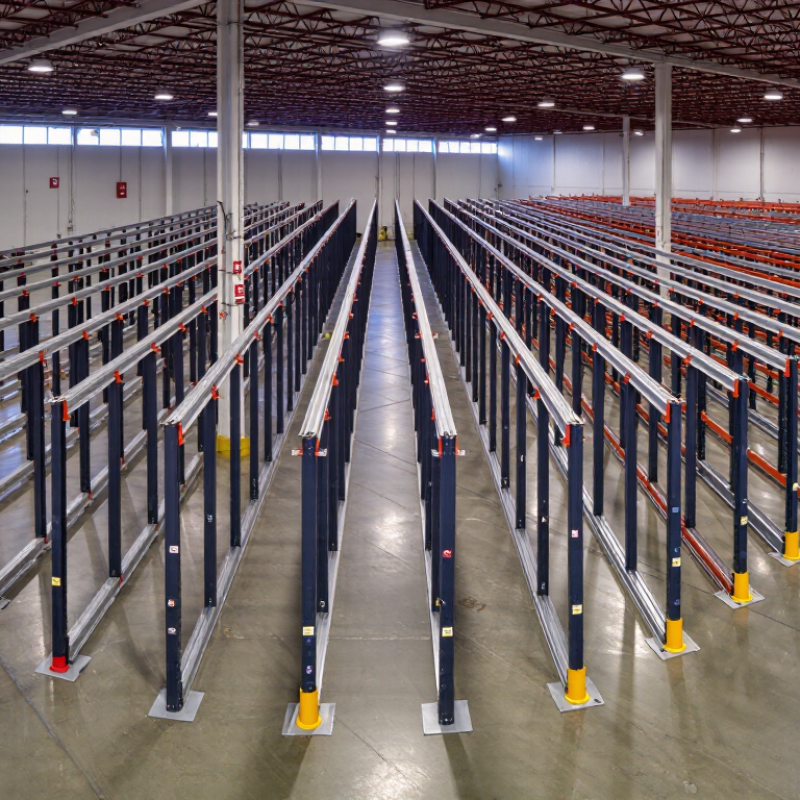
Before reusing warehouse racks, inspect every component under good lighting. A rack can look straight and still be unsafe. Check uprights for bends, twists, deep rust, and crushed sections. Examine beams for dents, cracked welds, and damaged connectors. Pay close attention to base plates and anchor bolts. Loose anchors need immediate attention. Do not guess.
Measure upright plumbness and compare each beam length with the planned layout. Confirm the original load data whenever possible. If records are missing, treat the rack as unverified. A qualified structural professional should review uncertain capacities. Local building and workplace requirements may also affect reuse. Small differences matter.
Reconfiguration requires more than moving beams into empty slots. Check that frames, beams, safety pins, decking, and protectors remain compatible. Keep heavier loads on lower levels, and avoid placing concentrated loads on weak decking. Mark approved load limits where workers can see them. Replace visibly damaged parts instead of hiding them with paint. Cosmetic repairs can disguise serious problems. I have seen reused systems fail during planning because measurements were rushed. A simple floor plan, component count, and inspection record can prevent that mistake. Reuse is practical only when condition, capacity, and configuration support each other.
| Assessment Dimension | What to Inspect | Acceptable Reuse Indicators | Warning Signs | Recommended Action | Sample Status |
|---|---|---|---|---|---|
| Upright Frames | Check columns, bracing, footplates, holes, base sections, and vertical alignment. | Straight members with intact bracing, clear connection holes, and no significant permanent deformation. | Bent columns, twisted frames, stretched holes, missing braces, or damaged base plates. | Quarantine visibly damaged frames. Reuse only after inspection and confirmation of the original design capacity. | Reuse Candidate |
| Beams | Inspect beam flanges, connectors, safety locks, welds, and evidence of impact or sagging. | Beam ends fit securely, locking devices operate correctly, and there is no visible cracking or severe bending. | Open connectors, damaged safety pins, cracked welds, excessive deflection, or impact dents near connections. | Replace damaged beams. Do not straighten, weld, or modify load-bearing members without engineering approval. | Inspect Further |
| Load Capacity | Verify beam capacity, frame capacity, bay configuration, pallet weight, and load distribution. | Original capacity information is available and matches the proposed height, span, beam levels, and pallet loads. | Missing load data, mixed components, altered beam levels, or loads exceeding the documented rating. | Obtain a qualified structural review before changing bay widths, heights, or load levels. | Hold for Verification |
| Corrosion and Surface Condition | Look for rust scale, pitting, moisture damage, coating loss, and corrosion around welds and base plates. | Minor surface rust with no measurable section loss or loss of connection integrity. | Deep pitting, flaking metal, holes, severe rust at joints, or corrosion that reduces the member section. | Clean and repaint light corrosion. Remove severely corroded structural parts from service. | Conditional Reuse |
| Anchors and Floor Fixings | Inspect anchor bolts, base plates, concrete condition, bolt tightness, and the required anchoring layout. | Anchors are present, correctly positioned, tight, and suitable for the floor slab and rack arrangement. | Missing anchors, cracked concrete, oversized holes, loose bolts, or incompatible fixing hardware. | Repair the floor or install approved anchors according to the layout and structural requirements. | Repair Required |
| Connections and Locking Devices | Test beam connectors, locking pins, bolts, clips, braces, and frame-to-frame ties. | All connections are complete, compatible, fully engaged, and free from cracks or excessive wear. | Missing pins, incompatible parts, loose bolts, damaged connectors, or forced-fit components. | Use only compatible replacement hardware. Never rely on improvised bolts, wire, or unapproved welds. | Reuse After Completion |
| Decking and Pallet Supports | Check wire decking, panels, support bars, pallet beams, gaps, load contact points, and edge damage. | Decking is stable, correctly supported, undamaged, and suitable for the pallet dimensions and load type. | Broken wires, sharp edges, excessive corrosion, unsupported overhangs, or gaps that allow pallet movement. | Replace damaged decking and confirm the rated capacity of the replacement support system. | Reuse Candidate |
| Impact Damage | Inspect columns and lower frame sections for forklift strikes, dents, bends, tears, and displaced components. | No structural impact damage or only minor cosmetic marks outside load-bearing zones. | Visible bending, buckling, twisting, cracked welds, torn steel, or displaced frames. | Immediately unload and isolate damaged sections. Replace affected components rather than repairing them informally. | Do Not Reuse |
| Configuration Compatibility | Compare frame depth, beam length, connector type, bay width, height, aisle clearance, and accessory compatibility. | Components fit without drilling, cutting, forced assembly, or unapproved changes. | Mixed systems, uncertain dimensions, modified holes, incompatible connectors, or insufficient clearance. | Measure every component and create a revised layout before installation. | Plan Required |
| Safety Accessories | Check row spacers, column guards, end barriers, back stops, mesh panels, signage, and pallet supports. | Accessories are present where required by the risk assessment and securely attached. | Missing guards, damaged barriers, absent back protection, unclear capacity signs, or unprotected pedestrian areas. | Add or replace protective accessories before placing the rack into service. | Upgrade Required |
| Documentation and Inspection Records | Review original drawings, capacity signs, inspection history, repair records, installation instructions, and component identification. | The rack can be identified and its intended configuration and capacity can be verified. | No records, unknown origin, missing capacity data, or uncertain history of modifications and damage. | Complete a documented inspection and obtain competent technical advice before reuse. | Verification Needed |
Reuse Decision Guide
Reuse used warehouse racks only when the components are compatible, structurally sound, correctly anchored, protected against foreseeable impacts, and supported by verified load information. Any rack with significant deformation, cracked welds, severe corrosion, or unknown capacity should be removed from service until assessed by a qualified professional.
Remove dust, oil, labels, and loose paint with low-moisture cleaning methods. Dry every surface completely. Avoid soaking connectors or anchor points. A clean beam can still be unsafe.
Inspect uprights, beams, braces, connectors, safety pins, and footplates under bright light. Look for bends, elongated holes, cracked welds, and deep corrosion. Check hidden areas behind labels and pallets. Do not guess.
Move damaged parts into a clearly marked quarantine area. Record their dimensions, profiles, condition, and original load information. Do not return questionable parts to service. That shortcut can become expensive.
Never heat-straighten a structural member without qualified engineering approval. Replace missing fasteners with approved equivalents. Do not force incompatible parts together. Small gaps matter.
Measure aisle widths, slab condition, sprinkler clearance, traffic zones, and floor anchorage. Check whether forklifts or carts can turn without striking corners. Uneven concrete can destabilize a sound frame. This detail is easy to miss.
Use only frames with verified capacities and compatible components. Replace damaged beams instead of forcing poor fits. Install locking pins, suitable anchors, and clear load information. Recalculate every level.
Lower sections can support packing benches, tool storage, or light assembly. Calculate these loads separately from pallet-storage loads. Keep work surfaces stable and accessible. The first layout may be wrong.
Map pallet sizes, product movement, equipment paths, and walking routes before installation. Place fast-moving stock near receiving and dispatch areas. Leave turning space around doors, columns, sprinklers, and emergency routes. Measure twice. Mark the floor.
Replacement may be wiser when history is unknown or damage is extensive. Incompatible components also create serious uncertainty. Have a qualified specialist review altered layouts and heavier loads. Recheck every connection after the first loaded shift.
Reusing and reconfiguring used warehouse racks can reduce costs, extend equipment life, and create a more efficient storage environment when planned carefully. The first step is to assess each rack component for structural safety, corrosion, deformation, missing parts, and remaining load capacity. Clean the components thoroughly, repair or replace damaged pieces, and prepare all parts before assigning them to a new application. Depending on the facility’s needs, the racks may be reused for pallet storage, shelving, workstations, staging areas, or material-handling support.
A successful project also requires a layout that matches product dimensions, workflow, available floor space, and expected loads. Learning how to reuse and reconfigure second hand warehouse racks includes planning aisle widths, access points, rack heights, and safe weight distribution before installation. After assembly, inspect every connection and protective feature, verify stability, and establish a routine maintenance schedule. Regular checks can identify wear early and help keep the reconfigured system safe, practical, and reliable over time.

 LogiSteel Racking